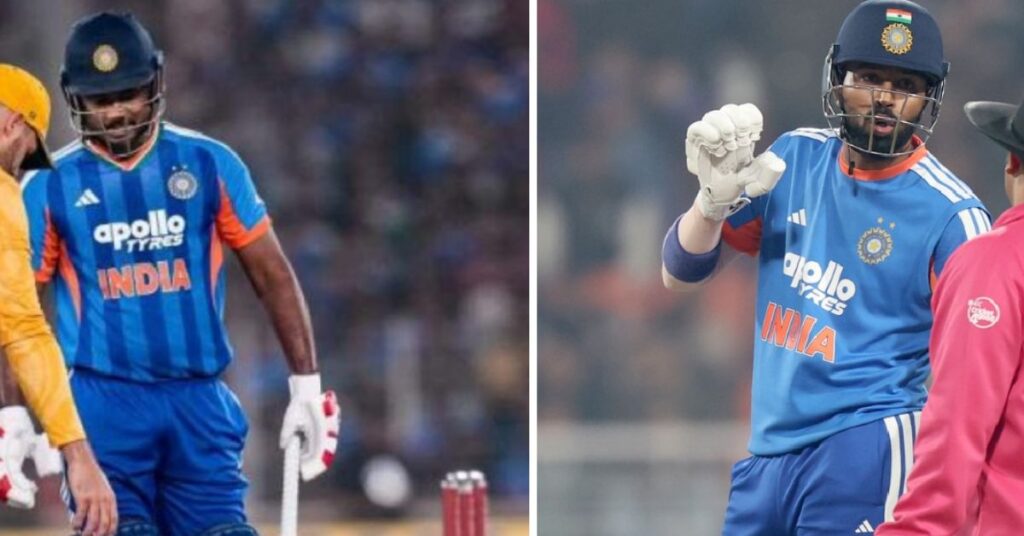

Modern cricket has entered an era of unprecedented power-hitting, where batters routinely clear 90-metre boundaries and strike the ball harder and faster than ever before. While fans celebrate sixes sailing into the stands, an uncomfortable and increasingly serious issue is being overlooked: the safety of umpires standing in the line of fire.
Recent matches have once again brought this concern into sharp focus, as hard-hitting Indian stars like Sanju Samson and Hardik Pandya unleashed thunderous shots that narrowly missed—or directly struck—on-field umpires. These moments may look dramatic on television, but they raise a vital question the ICC can no longer ignore:
👉 Are umpires adequately protected in the age of extreme power-hitting?
This is not about blaming players. It is about acknowledging that the game has evolved—and player safety protocols must evolve with it, including for the officials who officiate matches under increasing physical risk.
Cricket Has Changed — But Umpire Safety Hasn’t
Cricket today is vastly different from the game played even 15 years ago.
What Has Changed
- Bats are thicker, lighter, and more powerful
- Players are stronger, fitter, and faster
- Power-hitting is a core strategy, not a bonus
- Flat pitches and short boundaries encourage aggression
Yet, one thing remains almost unchanged:
👉 Umpires still stand in the same positions, wearing minimal protective gear.
In a sport where fielders wear helmets, pads, thigh guards, chest guards, and even arm protection, umpires are still largely exposed.
When Power-Hitters Become a Safety Hazard (Unintentionally)
Players like Sanju Samson and Hardik Pandya epitomise the modern batter.
Why They Are So Dangerous (Physically, Not Intentionally)
- Samson’s bat swing is clean and flat, producing bullet-like shots
- Hardik Pandya’s bat speed generates immense force even on mistimed hits
- Both target straight boundaries, where umpires are positioned
A mishit from such players can travel faster than many bowlers’ deliveries.
This is not a criticism of their intent—it is a byproduct of how the modern game is played.
Near-Misses Are Becoming Too Common
In recent seasons, there have been multiple incidents where umpires have:
- Been struck by the ball
- Narrowly avoided serious injury
- Been forced to momentarily stop play
Each time, it is brushed aside as “unfortunate” or “part of the game”.
But in reality:
- Reaction time is minimal
- Distance from batter is short
- Ball velocity is extremely high
All it takes is one serious injury for the ICC to realise it acted too late.
Umpires Are Not Trained to Dodge 150 km/h Projectiles
Fielders are trained athletes. Umpires are not positioned to react like slip fielders or close-in catchers.
Why Umpires Are Vulnerable
- They are focused on judging the ball, crease, and bat
- Their stance is static, not athletic
- They do not anticipate a shot at them
- They lack protective reflex positioning
Expecting umpires to “move out of the way” is unrealistic and unfair.
Why This Is an ICC Responsibility — Not a Player Issue
It is easy to point fingers at batters for “hitting too hard”. That argument misses the point.
Cricket authorities:
- Allow bat technology to evolve
- Prepare flat pitches
- Shorten boundaries
- Encourage aggressive formats
If the ICC promotes a brand of cricket built on power, it must also protect everyone involved, including umpires.
This is a governance issue, not a discipline issue.
The Psychological Toll on Umpires
Beyond physical danger, there is a mental burden.
Umpires must:
- Stay focused despite fear of being hit
- Maintain neutrality under pressure
- Make split-second decisions
Subconscious fear can affect:
- Positioning
- Concentration
- Confidence in decision-making
Protecting umpires is not just about helmets—it is about preserving decision quality and mental clarity.
Comparing Cricket With Other Sports
Other sports have already addressed similar risks.
Baseball
- Umpires wear chest guards, masks, shin pads
- Home-plate umpires are fully protected
Ice Hockey
- Referees wear protective padding
- Helmets are mandatory
American Football
- Officials wear protective gear
- Safety protocols are constantly reviewed
Cricket stands out as an outlier—a modern sport with outdated official protection.
What Happens If an Umpire Is Seriously Injured?
Let’s consider the worst-case scenario:
- A ball strikes an umpire’s head or chest
- Serious injury occurs on live broadcast
- Match is halted
- Questions flood in about negligence
The reputational damage to the ICC would be enormous.
Waiting for an accident before acting is administrative irresponsibility.
Why Helmets Alone Are Not Enough
Some may argue: “Just give umpires helmets.”
That’s a start—but not enough.
Umpires May Need
- Lightweight chest guards
- Forearm and thigh padding
- Impact-absorbing clothing
- Optional protective headgear
The key is smart, discreet protection that does not interfere with mobility or authority.
Technology Can Help Too
Beyond gear, the ICC can rethink umpire positioning.
Possible Innovations
- Slight positional adjustments during powerplays
- Data-driven analysis of shot trajectories
- Modified standing angles in limited-overs cricket
- Use of technology to reduce on-field exposure
The game already uses ball-tracking and AI—why not safety analytics?
The Growth of T20 and the Safety Crisis
The rise of:
- T20 cricket
- Franchise leagues
- Impact Player rules
has accelerated power-hitting beyond traditional norms.
Matches are shorter.
Shots are riskier.
Intent is aggressive from ball one.
Yet umpire protocols remain rooted in Test-match era assumptions.
Sanju Samson, Hardik Pandya — Symbols of the New Age
It is important to be clear:
- Samson and Pandya are not at fault
- They represent the modern batter’s skillset
- Any top power-hitter poses similar risk
Their names come up because:
- They hit straight and hard
- They play in high-visibility matches
- Their shots highlight the issue clearly
This could just as easily apply to any elite batter in world cricket.
Why Fans Should Care
Some fans might ask: “Why does this matter?”
It matters because:
- Umpires are essential to fair cricket
- Injured officials disrupt tournaments
- Poor safety discourages new umpires
- Decision quality affects match outcomes
Cricket cannot function without confident, protected officials.
The Silent Workforce of Cricket
Umpires rarely get praise.
They face constant scrutiny.
They travel endlessly.
They absorb abuse and pressure.
Asking them to also risk physical harm is unacceptable in modern sport.
Protecting umpires is a matter of respect, not convenience.
What the ICC Should Do Immediately
Short-Term Actions
- Introduce optional protective gear
- Trial padded clothing in T20s
- Issue safety guidelines for positioning
Medium-Term Actions
- Consult sports safety experts
- Redesign umpire uniforms
- Test new positioning models
Long-Term Vision
- Make umpire safety central to laws and playing conditions
- Treat officials as athletes requiring protection
- Normalise protective gear without stigma
Avoiding the “Too Late” Moment
Cricket history is filled with reforms that came after tragedy or controversy.
- Helmet adoption after serious injuries
- Concussion protocols after long delays
The ICC has a chance to be proactive instead of reactive.
Modern Cricket Needs Modern Thinking
The spectacle of six-hitting will only increase.
Bat technology will improve.
Players will get stronger.
Ignoring umpire safety today means gambling with lives tomorrow.
Final Thoughts: Protect the Game by Protecting Its Guardians
The debate is not about restricting batters like Sanju Samson or Hardik Pandya.
It is about recognising that cricket has changed—and safety standards must change too.
Umpires are:
- Guardians of fairness
- Enforcers of the laws
- Essential to the sport’s integrity
If the ICC truly wants to future-proof cricket, it must save the umpires before it’s too late.
Power-hitting is the future.
But player safety must include everyone on the field.